

Introduction
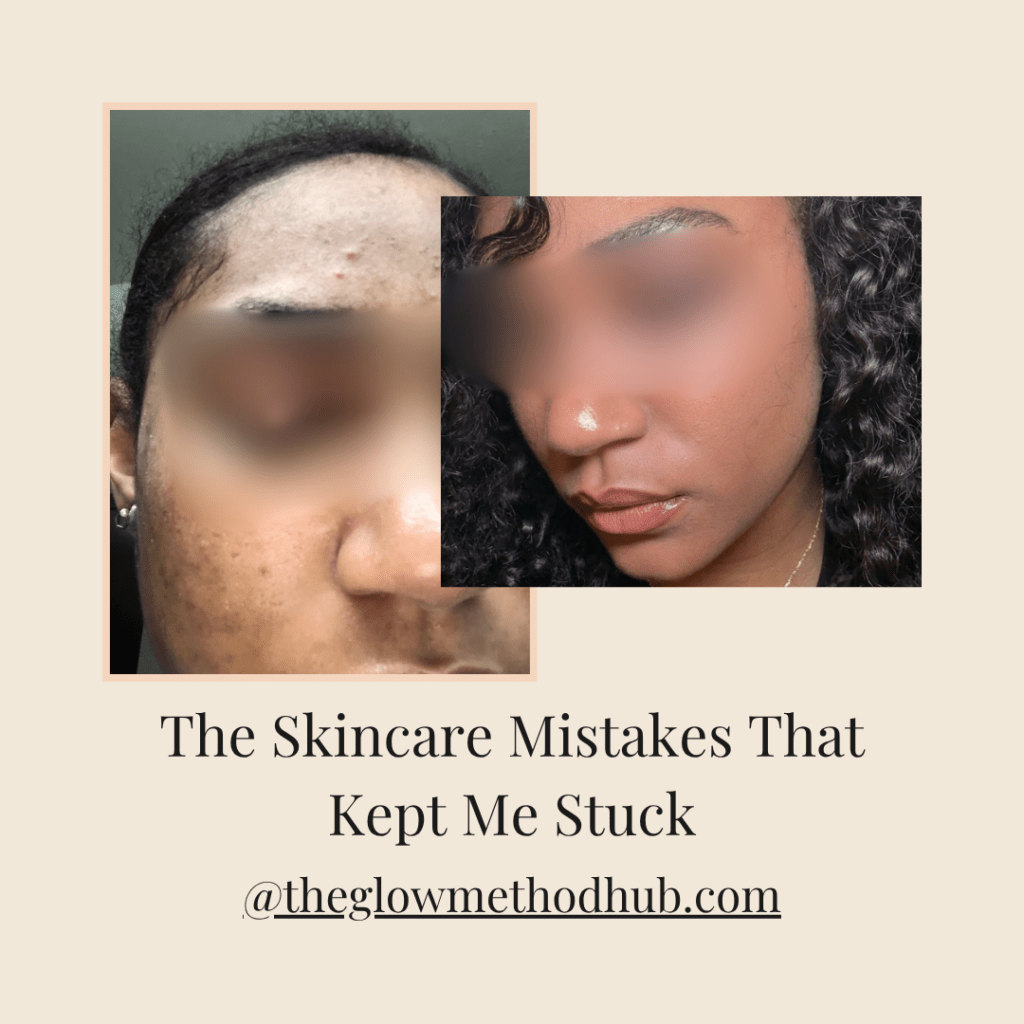
I can’t tell you how many skincare products I’ve emptied trying to clear my acne.
Every new cleanser, serum, toner, or spot treatment came with the same thought:
“Maybe this will finally be the one.”
I’d use it exactly how the directions said. I’d check the mirror every morning, hoping something had changed overnight. Sometimes I’d convince myself it looked a little better. Then the bottle would run out, my skin would look exactly the same, and I’d be back online searching for the next product that promised clear skin.
Looking back, I wasn’t just spending money on skincare.
I was spending years believing that if I could just fix my face, I’d finally feel comfortable in it.
I developed acne when I was around 11 years old, and it stayed with me for most of my life. Middle school and high school were especially hard. Acne wasn’t something I could leave at home—it was the first thing I saw in the mirror every morning, and it often felt like the first thing other people noticed too.
When you’re that young, it’s hard to separate your skin from your self-worth.
Every breakout felt like another reminder that I hadn’t figured it out yet.
Every new product felt like another chance to become the version of myself I thought I needed to be.
The truth is, I wasn’t chasing healthy skin.
I was chasing acceptance.
Ironically, that mindset is what kept me stuck.
I reacted instead of learning. I switched products before giving them time to work. I layered ingredients that shouldn’t have been layered. I bought into trends instead of understanding what my skin actually needed.
It took me years—and more money than I’d like to admit—to realize that clear skin isn’t something you can panic your way into.
What finally changed wasn’t one magical product.
It was changing the way I approached my skin.
These are the five biggest mistakes I made and the lessons I wish someone had shared with me years earlier.
Mistake #1: I Thought More Products Meant Better Results
One of my worst skincare memories happened in middle school.
Spot treatments were everywhere, and since my entire face was breaking out, I figured I should treat…my entire face.
Without realizing it, I used a strong salicylic acid toner and followed it with an over-the-counter benzoyl peroxide treatment before bed.
I woke up the next morning with a swollen, painful face.
My skin was so inflamed that if I pressed on it, it left an indentation. I still had to go to school that day, and as a middle school girl who was already painfully self-conscious, it felt humiliating.
At the time, I thought I just hadn’t found the right combination of products.
Looking back, I was asking my skin to do way too much.
What I Learned
Acne-fighting ingredients can be incredibly effective, but they aren’t meant to be piled on all at once.
Overusing strong active ingredients can damage your skin barrier, making your skin more irritated, sensitive, and less able to tolerate the very treatments you’re relying on.
Eventually, I realized I needed to spend just as much time supporting my skin as I did treating it.
That meant incorporating ingredients that help maintain the skin barrier, such as:
- Ceramides
- Glycerin
- Hyaluronic acid
- Panthenol (Vitamin B5)
- Squalane
- Moisturizers containing a combination of ceramides, cholesterol, and fatty acids
Today, I still use active ingredients.
I just don’t treat them like a race.
What I’d Tell My Younger Self
Stop trying to punish your skin into changing.
Your skin isn’t the enemy.
You don’t need another spot treatment tonight.
You need patience, balance, and a routine your skin can actually handle.
Mistake #2: I Kept Chasing the Next Miracle Product
Every new skincare product felt like a fresh start.
I’d see an advertisement, read glowing reviews, and convince myself this one was different.
I wasn’t just buying a cleanser.
I was buying hope.
I tried everything.
The physical scrubs.
The expensive acne systems.
The products influencers swore by.
The trendy ingredients everyone seemed to be talking about.
When Korean skincare became popular, I thought maybe that would finally be the answer.
Every bottle represented another chance.
Then the bottle would run out, my acne would still be there, and I’d move on to something else.
Looking back, many of those products never had a fair chance.
I wasn’t staying consistent long enough to know whether they were actually working.
What I Learned
The biggest shift I made was focusing less on brands and more on ingredients.
Instead of asking,
“What’s everyone buying?”
I started asking,
“What ingredient actually addresses the concern I’m trying to solve?”
For example:
- Salicylic acid can help unclog pores and improve blackheads and whiteheads.
- Benzoyl peroxide is well supported for inflammatory acne because it helps reduce acne-causing bacteria.
- Adapalene and other retinoids help prevent clogged pores and support long-term acne management.
- Niacinamide may help reduce excess oil and calm redness.
- Azelaic acid can help with both acne and post-inflammatory hyperpigmentation.
More importantly, I learned that consistency beats constantly starting over.
Most acne treatments need weeks—not days—to show meaningful improvement.
What I’d Tell My Younger Self
You don’t need another viral product.
You need enough patience to let a good routine do its job.
Mistake #3: I Didn’t Wear Sunscreen
I didn’t wear sunscreen consistently until around 2020.
Looking back, I honestly can’t believe how much time I spent outside without it.
When I finally made sunscreen part of my routine, one of the biggest things I noticed was that the dark marks left behind after breakouts didn’t seem to linger as long.
That’s my personal experience, but there’s also good evidence behind why dermatologists recommend sunscreen for acne-prone skin.
What I Learned
Sunscreen doesn’t treat acne.
What it does do is protect healing skin from UV exposure, which can make post-acne dark marks appear darker and last longer.
It’s also one of the best long-term habits you can build for healthy skin.
If you’re acne-prone, look for a sunscreen that’s:
- Broad-spectrum SPF 30 or higher
- Non-comedogenic
- Comfortable enough that you’ll actually wear it every day
Because the best sunscreen is the one you consistently use.
What I’d Tell My Younger Self
You don’t have to earn the right to protect your skin.
Even if you’re breaking out, your skin deserves care.
Mistake #4: I Listened to Everyone Except Myself
This mistake had very little to do with skincare.
It had everything to do with insecurity.
I was bullied because of my acne.
Family members commented on it.
Advertisements reminded me there was always another product I “needed.”
After a while, I wasn’t making skincare decisions because they made sense.
I was making them because I wanted to stop feeling embarrassed.
The beauty industry is very good at making us believe we’re one purchase away from finally feeling confident.
I believed that for a long time.
What I Learned
Healthy skincare decisions don’t come from panic.
They come from understanding.
Today, I spend less time wondering what’s trending and more time asking:
- What does my skin actually need?
- Is there good evidence behind this ingredient?
- Have I given my current routine enough time?
Sometimes the best skincare decision isn’t buying something.
Sometimes it’s deciding not to.
What I’d Tell My Younger Self
Your worth was never tied to your skin.
The people who made you feel otherwise were wrong.
Mistake #5: I Treated Every Pimple Instead of Asking Why
This is the lesson that changed everything.
For years, my only goal was to get rid of pimples.
I wasn’t asking why they kept showing up.
Sometimes acne is related to excess oil.
Sometimes it’s clogged pores.
Sometimes it’s hormones.
Sometimes it’s irritation from products.
Sometimes it’s a combination of several things.
And sometimes there isn’t one simple explanation.
Once I stopped trying to fight every breakout individually, I started becoming curious instead.
What I Learned
Understanding your skin will always take you further than chasing trends.
That doesn’t mean becoming a dermatologist overnight.
It means learning enough to make thoughtful decisions.
Depending on your skin, that could mean:
- Supporting a damaged skin barrier.
- Choosing ingredients that target your specific concerns.
- Wearing sunscreen consistently.
- Seeing a dermatologist if your acne is persistent, painful, or causing scars.
- Accepting that your routine doesn’t have to look like everyone else’s.
The goal isn’t to own every trending product.
The goal is to understand what your skin is asking for.
What I’d Tell My Younger Self
Stop asking,
“How do I get rid of this pimple?”
Start asking,
“What is my skin trying to tell me?”
That one question changed the way I approached skincare forever.
My Honest Take

If I could go back in time, would I choose to have acne for over a decade?
Absolutely not.
For years, I believed that if I could just clear my skin, I’d finally feel prettier, more confident, and more accepted.
Looking back, I realize I wasn’t just trying to clear my acne.
I was trying to earn the right to feel good about myself.
But that’s a game none of us can win.
Beauty standards will always change. There will always be another trend, another ingredient, and another product promising to fix what it tells you is wrong with you.
What acne taught me was something much more valuable.
It taught me to care for my skin instead of fighting it.
To build healthy habits instead of chasing quick fixes.
And most importantly, it taught me that my worth was never waiting on the other side of clear skin.
If you’re reading this while feeling frustrated with your skin, I hope you learn that lesson sooner than I did.
Take care of your skin because it’s part of you: not because you think changing it will finally make you enough.
You already are.
Key Takeaways
- More products don’t always mean better results.
- A healthy skin barrier is just as important as treating acne.
- Choose products based on ingredients and your skin’s needs—not trends.
- Consistency usually matters more than buying something new.
- Daily sunscreen helps protect healing skin and supports long-term skin health.
- Acne doesn’t have one cause, so there isn’t one product that works for everyone.
- Your skin deserves care—not punishment.
Frequently Asked Questions
How long should I stick with a skincare routine?
Most acne treatments need 6–12 weeks of consistent use before you can fairly judge whether they’re working. Unless you’re experiencing significant irritation, try not to switch products too quickly.
Can using too many acne products make acne worse?
Yes. Layering multiple strong active ingredients can damage the skin barrier, leading to irritation, dryness, and making your skin less tolerant of treatment.
Do I need sunscreen if I have acne?
Yes. Sunscreen helps protect healing skin from UV damage and can help prevent post-acne dark marks from becoming more noticeable.
What ingredients can help fade post-acne marks?
Depending on your skin and the type of discoloration, ingredients with research supporting their use include vitamin C, azelaic acid, retinoids, tranexamic acid, kojic acid, and consistent daily sunscreen.
When should I see a dermatologist?
If your acne is painful, leaving scars, or hasn’t improved after several months of a consistent routine, it’s worth seeing a dermatologist. Sometimes the best solution isn’t another product—it’s professional guidance.
📌 Enjoyed This Article?
If you found this helpful, there’s plenty more where this came from.
✨ Follow Wellness Within Daily on Pinterest for:
- Healthy recipes
- Wellness inspiration
- Self-care routines
- High-protein meal ideas
- Glow-up tips
- Everyday healthy habits
And don’t forget to save this article so you can come back to it whenever you need a little inspiration.